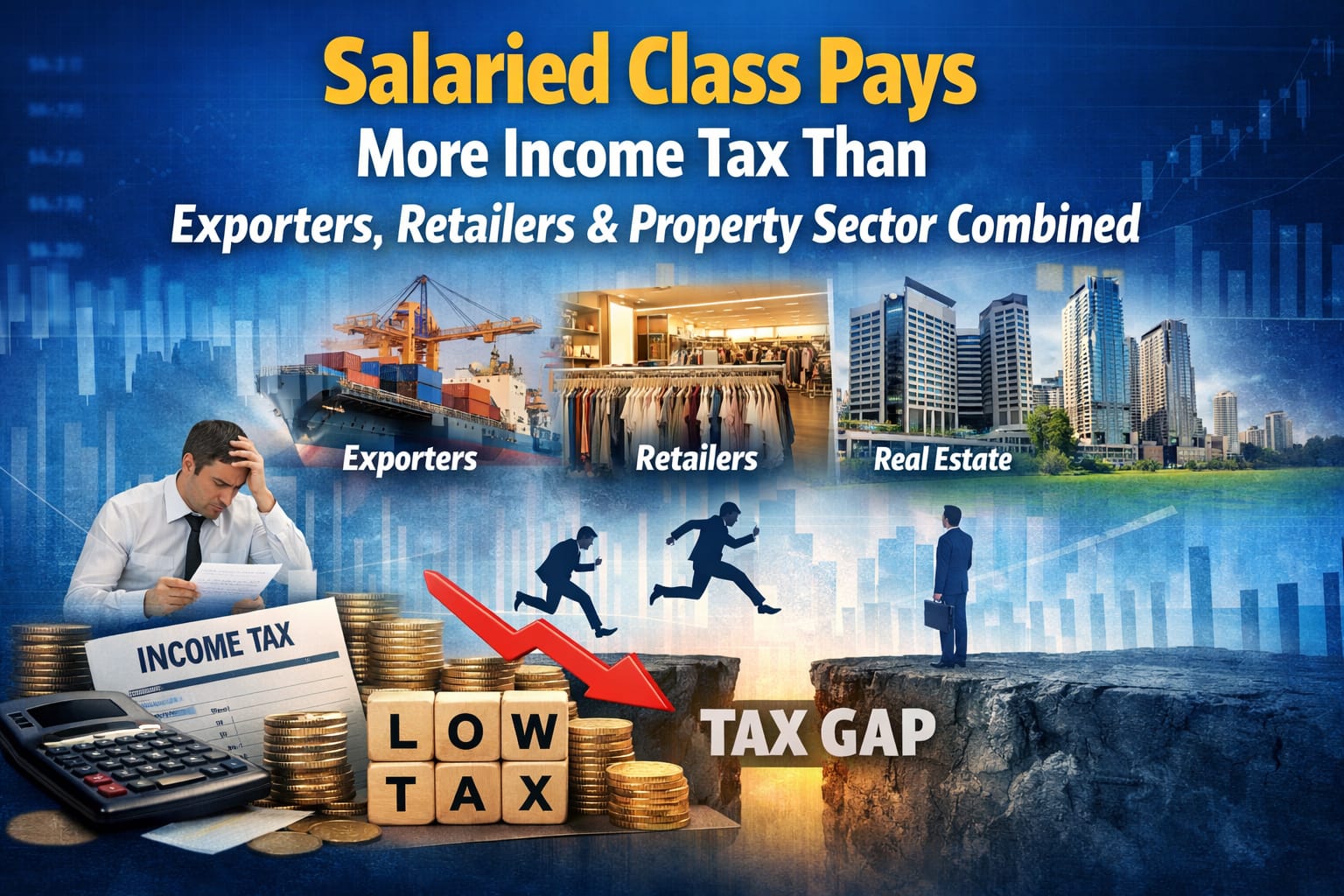
In a surprising yet revealing development, recent tax contribution data indicates that salaried individuals are now paying a greater share of income tax compared to exporters, retailers, and the real estate sector combined. The figures highlight a structural imbalance within the taxation framework where fixed-income earners are bearing a significantly heavier burden than business and investment segments.
This trend raises serious questions about tax equity, documentation of the economy, and the overall distribution of fiscal responsibility.
What the Latest Tax Data Shows
According to the latest collection patterns reported by the Federal Board of Revenue, salaried taxpayers have become one of the most reliable sources of direct tax revenue. Unlike other sectors where income reporting varies, salaries are documented at source, making deductions automatic and unavoidable.
Key Highlights:
- Salaried individuals’ tax contribution exceeds combined payments of exporters, retailers and property investors
- Tax deducted directly from payroll through withholding system
- Business and trading sectors continue to show low effective tax ratios
- Documentation gap remains a major challenge in non-salaried sectors
Why Salaried Class Pays More Taxes
1. Automatic Deduction System
Employees pay tax through monthly withholding at source. Employers deduct tax before salary reaches the employee’s bank account. This leaves no room for underreporting.
2. Undocumented Economy
Many businesses operate partially outside the documented economy. Cash transactions, informal trade, and weak audit enforcement result in lower declared income.
3. Preferential Policies & Concessions
Exporters often receive incentives, rebates, and reduced tax rates to promote foreign exchange earnings. Retail and property sectors also benefit from presumptive or fixed taxation schemes.
4. Lack of Enforcement in High-Value Sectors
High-value sectors like real estate frequently rely on valuation tables instead of market prices, reducing effective tax liability.
Economic Impact
The imbalance creates multiple consequences:
- Reduced purchasing power of middle class
- Increased inflationary pressure on households
- Discouragement of skilled workforce retention
- Trust deficit in tax fairness
- Narrow tax base despite rising revenue targets
Economists believe over-reliance on salaried taxpayers is unsustainable and may slow long-term economic growth.
Policy Debate: Fairness vs Revenue Stability
Government authorities rely on salaried tax collection because it is predictable and easy to collect. However, fiscal experts argue that a modern taxation system must expand the base rather than overburden compliant taxpayers.
Suggested reforms include:
- Digitization of retail transactions
- Real estate valuation reforms
- Track-and-trace implementation
- Broader audit coverage
- Incentives for voluntary documentation
Conclusion
The growing dependence on salaried taxpayers highlights a fundamental imbalance in the taxation structure. While employees continue to contribute consistently, large segments of the economy remain undertaxed. Sustainable fiscal policy requires widening the tax net rather than increasing pressure on already compliant individuals.
A balanced system would not only improve revenue stability but also restore confidence among taxpayers and strengthen economic growth.