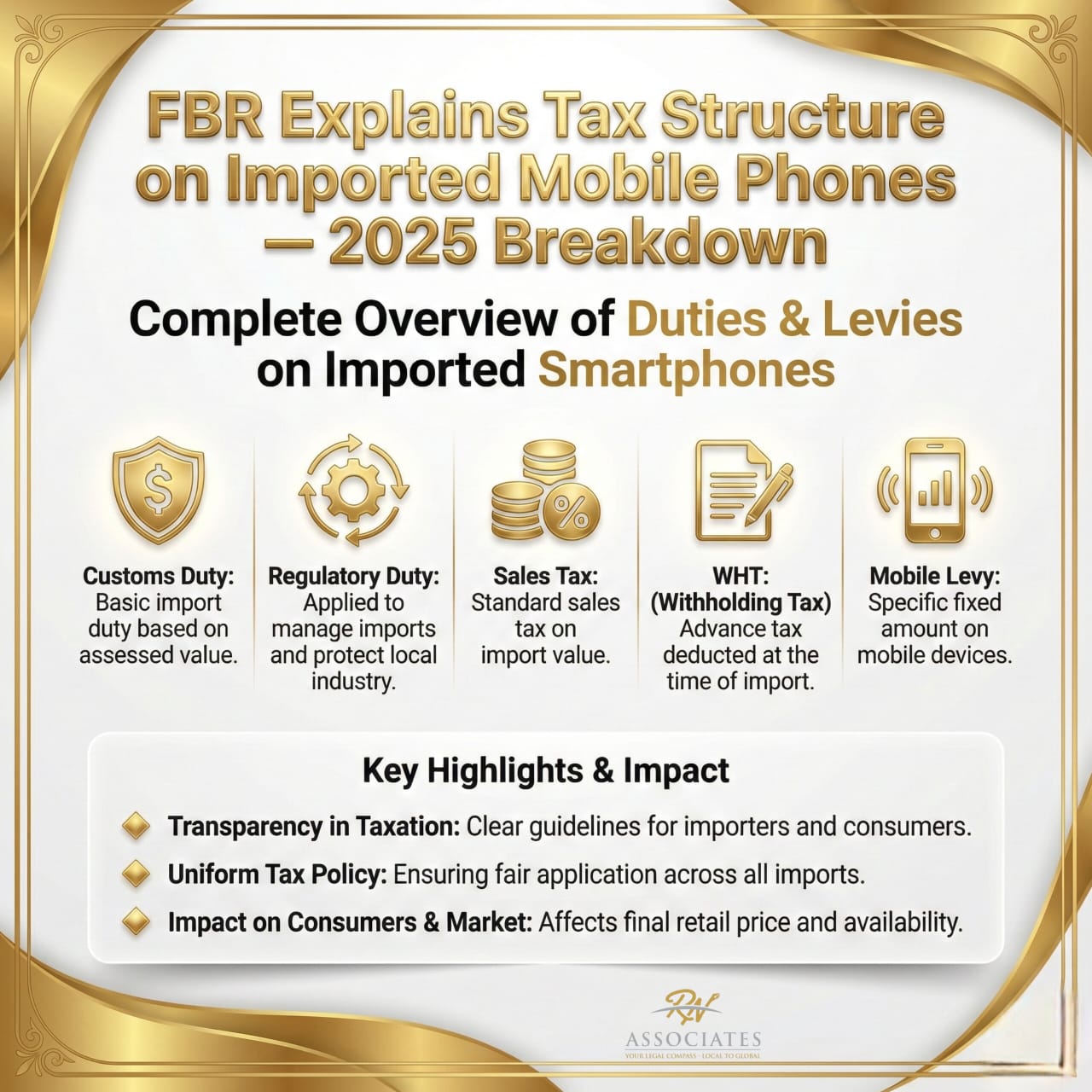
The Federal Board of Revenue (FBR) has recently provided a detailed clarification of the tax structure applied to imported mobile phones during a briefing to the National Assembly’s Standing Committee on Finance. The updated explanation is aimed at improving transparency, ensuring uniformity, and helping both consumers and importers fully understand how duties on smartphones are calculated in Pakistan.
Overview: How FBR Calculates Taxes on Imported Mobile Phones
According to FBR, all taxes, duties, and levies are charged based on the assessed value or C&F (Cost & Freight) value of the mobile device. This value-based method ensures:
✔ Fair and uniform taxation
✔ Standardized assessment across all brands and models
✔ Transparency in customs and import procedures
✔ Reduced confusion for traders and consumers
This means that whether the phone is an entry-level device or a flagship model, the same valuation rules apply.
Taxes Applied to Imported Mobile Phones in Pakistan
FBR highlighted that the total tax on a mobile phone is not a single charge but a combination of multiple duties and levies. These include:
1. Customs Duty (CD)
A standard duty applied to all imported goods, including smartphones.
2. Regulatory Duty (RD)
Applicable on certain value categories or specific models to regulate import volumes.
3. Sales Tax / Additional Sales Tax
Charged as a percentage of the assessed value, contributing significantly to the final price.
4. Withholding Tax (WHT)
Deducted at the import stage under income tax regulations.
5. Mobile Levy
A category-based levy specifically imposed on imported mobile phones.
6. Other Possible Surcharges
Additional duties or fees may apply depending on policy updates.
Each tax is calculated on the assessed value or C&F value of the device, meaning the final payable amount increases with the phone’s price.
Why FBR’s Breakdown Matters
FBR’s recent clarification aims to create a more transparent environment for mobile phone imports. The breakdown helps:
✔ Improve compliance among importers
✔ Reduce disputes over inconsistent tax charges
✔ Help consumers understand price variations
✔ Strengthen trust in customs processes
✔ Support Pakistan’s digital growth initiatives
With clearer rules, both importers and customers can better anticipate taxation impacts.
Impact on Importers & Consumers
For Importers
- Better planning for shipments
- Clear expectations of total tax liability
- Reduced delays due to valuation disputes
For Consumers
- Awareness of what contributes to the retail price
- Better understanding of price differences between local and imported models
- Transparency builds trust in the buying process
As mobile phone demand continues to rise in Pakistan, predictable taxation helps stabilize the market.
Conclusion
The FBR’s detailed explanation of the mobile phone tax structure reinforces its commitment to a transparent, fair, and standardized import system. With smartphone imports increasing every year, a clear understanding of duties ensures smoother trade operations and helps consumers make informed purchasing decisions.
This structured approach supports Pakistan’s broader goal of encouraging digital access and promoting an organized mobile phone market