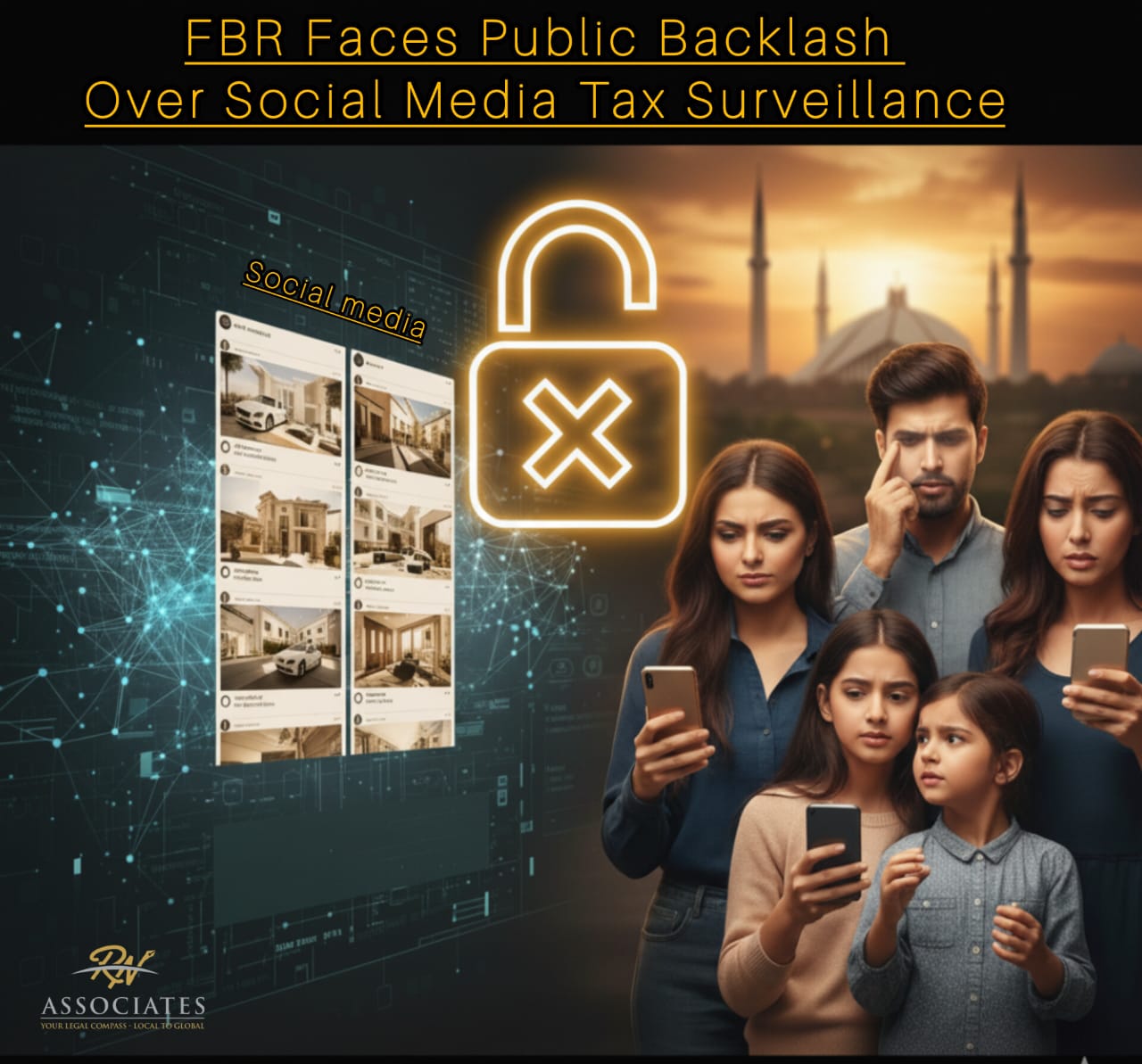
A New Kind of Tax Watchdog
The Federal Board of Revenue (FBR) has taken an unexpected turn in its latest crackdown on tax evasion — by turning to social media.
Recent reports reveal that the FBR has started monitoring platforms like Instagram, Facebook, and TikTok to track users’ lifestyles and spending patterns. The goal is to identify individuals whose online displays of luxury — foreign trips, designer items, high-end vehicles, or lavish weddings — don’t match their declared income.
This new strategy falls under what officials call a “lifestyle-based tax assessment.”
The idea? If someone’s social media presence suggests a lifestyle worth millions, but their tax return says otherwise, the FBR wants to know why.
How It Works
The FBR’s newly formed Lifestyle Monitoring Cell reportedly uses digital tools and AI-assisted reviews to spot inconsistencies between what people post online and what they report to the tax department.
Those who appear to be living “beyond their means” are being flagged for investigation — and in some cases, issued official notices for undeclared income or unreported assets.
Why the Public Is Angry
While the FBR insists this initiative is meant to promote fairness, the move has sparked strong backlash across Pakistan.
Critics call it an invasion of privacy and argue that social media is not proof of wealth. Many people post content for entertainment or branding purposes — not necessarily as a reflection of their real financial situation.
> “You can’t judge someone’s income by their Instagram feed,” said a Karachi-based influencer. “Half the time, it’s borrowed cars and rented villas just for content.”
Business owners and middle-income professionals also fear they’ll face unnecessary scrutiny, while major tax evaders with political influence may remain untouched.
Privacy and Legal Concerns
Legal experts warn that the FBR’s expanding authority could easily lead to misuse. Without clear rules or judicial oversight, citizens risk being monitored without consent or due process.
“The issue isn’t tax collection — it’s about boundaries,” said one Lahore-based lawyer. “Tax authorities should not be allowed to turn personal social media accounts into surveillance tools.”
Why FBR Says It’s Necessary
Pakistan has long struggled with low tax compliance — fewer than 5 million people file returns in a country of over 240 million. The FBR argues that lifestyle audits can help expose unregistered businesses, influencers earning from foreign platforms, and individuals hiding assets.
Officials say the surveillance is limited to publicly available content, and their goal is to encourage honest reporting, not intimidate citizens.
Still, questions remain:
- Who decides what qualifies as “lavish”?
- How accurate are these assessments?
- What safeguards protect innocent taxpayers?
Experts Urge a Balanced Approach
Economists believe the FBR’s goals are valid but warn that heavy-handed tactics could backfire.
Instead of fear-driven audits, experts recommend:
- Simplified tax filing systems
- Public awareness campaigns
- Incentives for voluntary compliance
- Transparent audit criteria
“When people trust the system, they’re more likely to comply,” noted a member of the Islamabad Chamber of Commerce.
The Bigger Picture
Pakistan’s economy is under immense pressure, and expanding the tax base is essential for growth. But if citizens feel constantly watched online, this could harm digital entrepreneurship and social trust.
The key lies in balance — between enforcing tax laws and respecting privacy.
Final Thoughts
The FBR’s use of social media surveillance marks a new chapter in Pakistan’s tax enforcement. Whether it becomes a smart digital reform or a controversial overreach depends on how transparently and fairly it’s implemented.
Tax experts agree: it’s time to modernize, but not at the cost of public confidence.