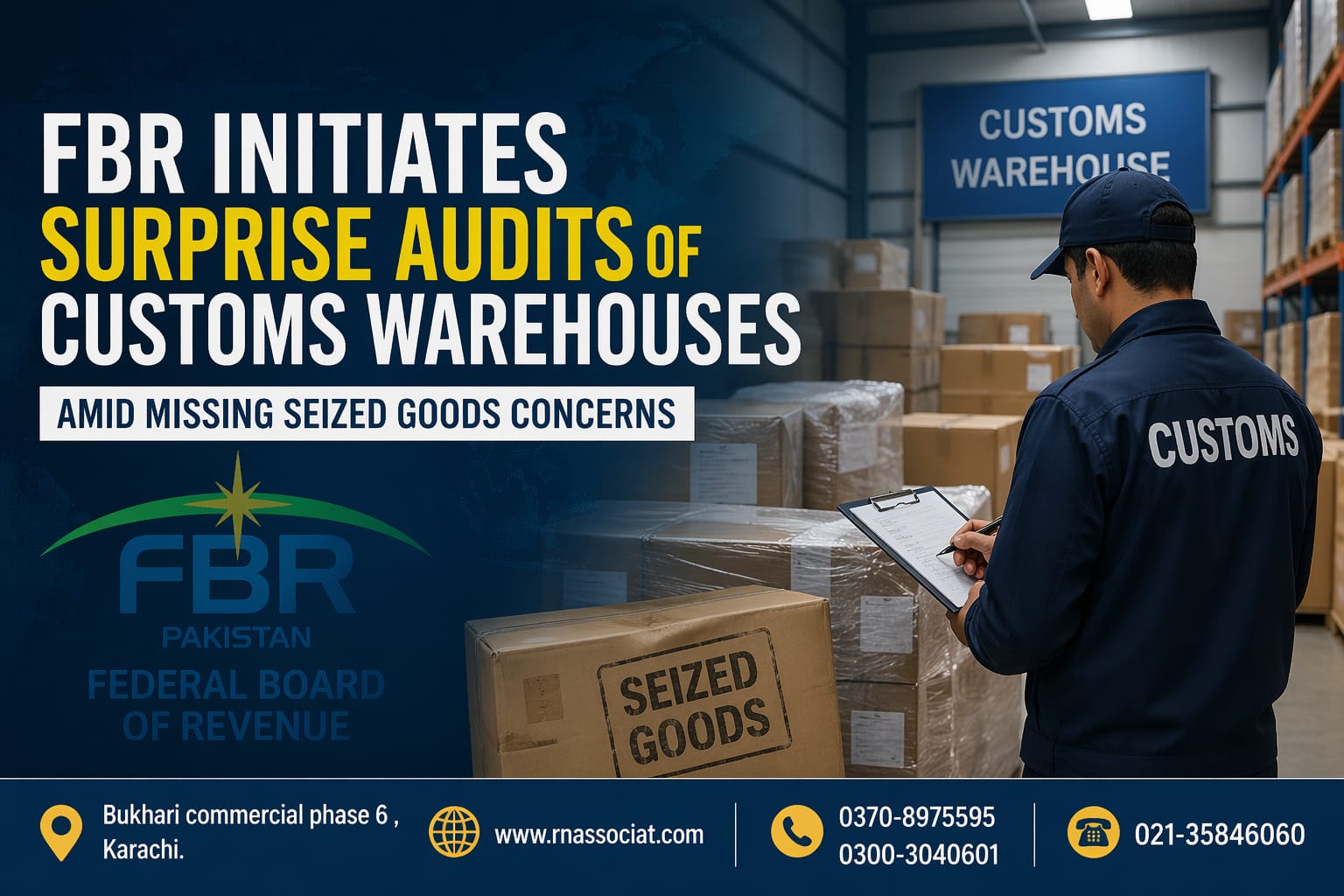
In a significant move to ensure transparency and accountability, Pakistan’s Federal Board of Revenue (FBR) has launched special audits of customs warehouses across the country. This decision follows growing concerns over the alleged disappearance and mismanagement of seized goods stored in these facilities.
The step reflects the authority’s renewed focus on tightening internal controls and restoring public trust in customs operations.
Why the Audits Are Happening
Reports have surfaced suggesting that confiscated goods—ranging from electronics to imported luxury items—may have been unlawfully removed or mishandled within certain customs warehouses.
To address these concerns, FBR has ordered:
- Immediate inspections of warehouse inventory
- Verification of recorded seized goods
- Cross-checking physical stock against official documentation
These audits aim to uncover any discrepancies and identify responsible parties.
What the Investigation Will Cover
The special audit process is expected to be comprehensive and detailed. Authorities will focus on:
- Inventory Accuracy: Matching seized goods with digital and manual records
- Security Measures: Evaluating surveillance systems and warehouse access controls
- Staff Accountability: Reviewing roles of customs officials and warehouse personnel
- Operational Transparency: Identifying gaps in current procedures
Officials have indicated that any proven negligence or misconduct will lead to strict disciplinary and legal action.
Impact on Businesses and Trade
While the audits are internal, they may indirectly affect businesses involved in import/export activities.
Possible impacts include:
- Temporary delays in customs clearance
- Increased scrutiny on goods under review
- Strengthened compliance requirements for traders
However, in the long run, these measures are expected to create a more reliable and transparent trade environment.
FBR’s Commitment to Reform
This initiative is part of a broader effort by FBR to modernize customs operations and eliminate corruption risks. By enforcing stricter checks and balances, the authority aims to:
- Improve governance within customs departments
- Prevent revenue losses due to mismanagement
- Enhance confidence among investors and traders
Digital tracking systems and improved monitoring mechanisms are also being considered to prevent future incidents.
What This Means Going Forward
The outcome of these audits could lead to major reforms in how seized goods are handled in Pakistan. If irregularities are confirmed, it may result in:
- Policy changes in warehouse management
- Introduction of stricter audit protocols
- Increased automation and digital oversight
This move sends a clear message that accountability within public institutions is being taken seriously.
Conclusion
FBR’s decision to conduct special audits of customs warehouses marks a critical step toward transparency and operational integrity. While the investigation may uncover challenges within the system, it also presents an opportunity to strengthen processes and rebuild trust.
For businesses and stakeholders, staying compliant and informed will be key as the situation develops.