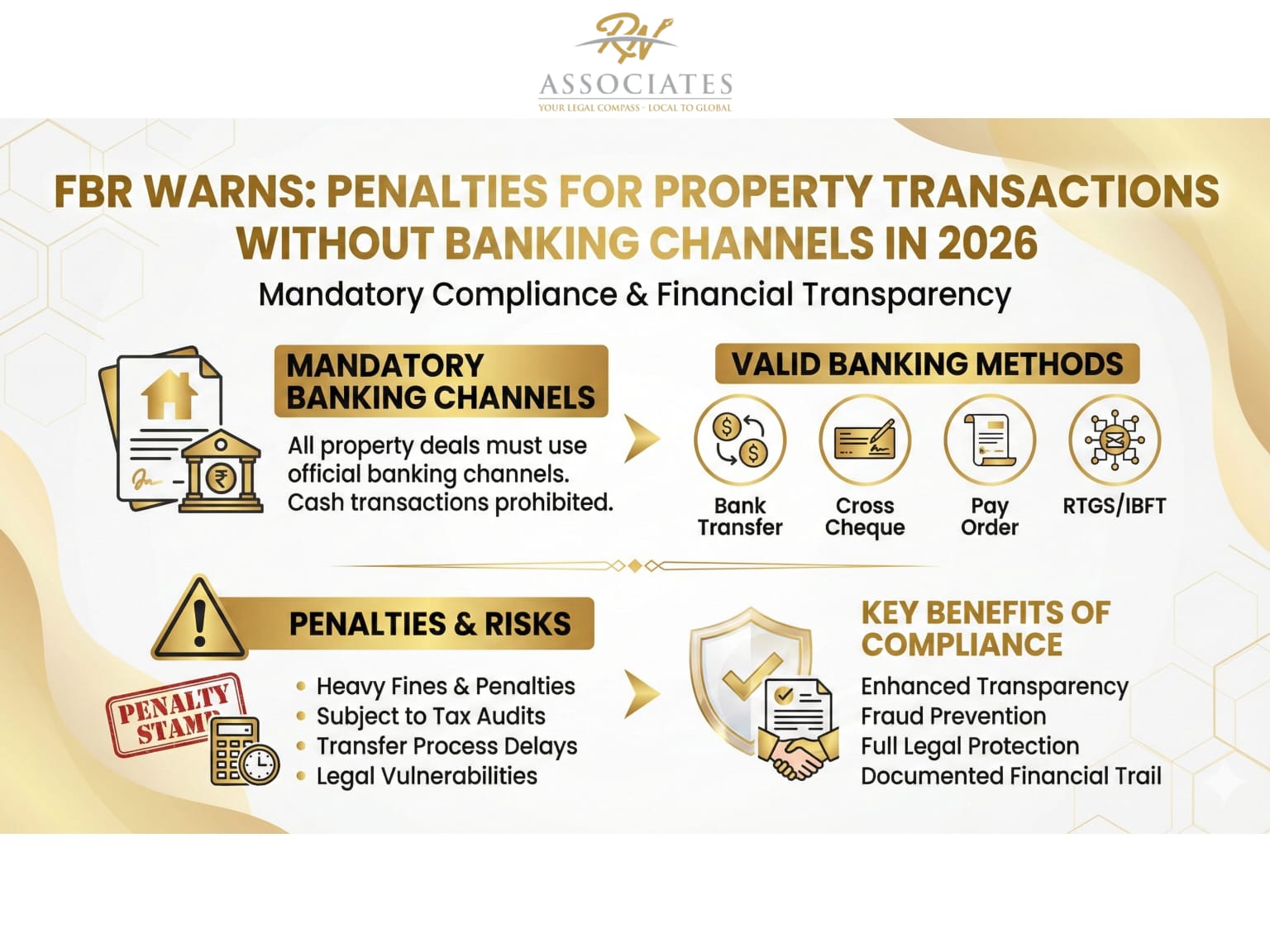
The real estate market in Pakistan is set for a significant change as the Federal Board of Revenue prepares to implement stricter rules for property dealings in 2026.
The tax authority has clearly stated that anyone buying or selling property without using the correct banking methods will face large fines, inspections, and may even encounter problems with property transfers.
This rule is intended to stop illegal cash transactions, improve tax reporting, and ensure that all property deals are tracked through official financial systems.
Why FBR Is Requiring Banking Channels for Property Deals
The real estate sector in Pakistan has often been a place where cash transactions take place, leading to incomplete tax reporting and loss of government income.
The Federal Board of Revenue wants to:
– Prevent money laundering
– Stop properties from being undervalued
– Make dealings more open
– Build a stronger tax system
– Ensure all payments are trackable
By using banking methods, the government aims to close gaps that allow illegal money to flow through real estate.
What Constitutes a Valid Banking Channel?
To avoid being penalized, all property purchases or sales in 2026 must be handled through:
– Bank transfers approved by the State Bank of Pakistan
– Cross cheques
– Pay orders
– Online banking transfers
– RTGS/IBFT
Any payment made in cash, no matter the amount, will be considered non-compliant.
What Happens if You Buy or Sell Property Without Banking Channels?
From 2026 onwards, those involved in transactions not done through banking may face:
1. Heavy Financial Penalties
The FBR will apply big fines to buyers, sellers, and real estate agents involved in deals that lack proper documentation.
2. Delays or Cancellation of Property Transfer
If there is no proof of payment, the transfer could be stopped or delayed.
3. Mandatory Tax Audits
People may be required to undergo tax reviews, income checks, and investigations into the source of their money.
4. Legal Action Under Tax Laws
Large cash transactions may lead to legal actions under:
– Anti-money laundering regulations
– Tax evasion laws
– Misrepresentation of property values
5. No Legal Protection
If there are disputes, courts will not consider cash payments as valid.
Who Is Most at Risk?
This new rule will especially impact:
– Buyers who use unrecorded cash to purchase property
– Sellers who hide their profits or capital gains
– Real estate agents who conduct cash deals
– Property investors who flip homes without proper tax records
– Individuals who avoid taxes by using cash payments
How to Stay Safe and Avoid Penalties
✔ Always use a Banking Method. Only make payments through traceable financial channels.✔ Keep Payment Documents SafeStore:
– Transaction receipts
– Written memos
– Bank statements
– Sale agreements
✔ Declare the True Value of the Property
Avoid lowering the price to save taxes, as it will result in more audits.
✔ Get Advice from a Tax or Legal Professional
They can help ensure your transaction meets all the rules.
✔ Submit Annual Tax Returns
Being a regular taxpayer reduces the chance of facing penalties.
Benefits of Using Banking Channels
Although the rules are strict, they also provide advantages for honest buyers:
– Clear proof of ownership
– Lower risk of fraud
– Clean and documented records
– Easier approval for loans
– Legal protection in case of disputes
Final Thoughts
The year 2026 represents a major change for Pakistan’s real estate market.
With stronger enforcement from the Federal Board of Revenue, cash transactions are no longer a viable option for property deals. Using the right banking channels is now a requirement, not a choice.
Following these rules not only helps avoid fines but also creates a safer and more transparent environment for all involved in the real estate sector.